

Do I have to invest in normal LED lights or get a grow light to ensure my indoor plants are getting enough light? The truth is that it depends on a number of things you should know.
In this article, you’ll learn the benefits and drawbacks of using LED lights to grow plants along with some tips for getting the best result with your plants.
What Are LED Grow Lights? How Are They Used To Grow Plants?

LEDs, or light-emitting diodes, are a type of semiconductor. They work by using electrical current to produce light unlike standard incandescent bulbs which use a treated thin section of wire.
LEDs are used in many electronic devices, including TVs, computers, and flashlights and are much more efficient than standard bulbs. They give off a mere fraction of the heat produced by standard bulbs, too.
In recent years LED lights have become popular as grow lights for plants.
LED grow lights are used to supplement or replace sunlight. They’re often used in greenhouses or indoor gardens and are highly recommended for sun-loving houseplants.
LEDs are a popular type of grow light because they are energy-efficient and emit little heat.
Do LED lights help plants grow?
So, do LED lights help plants grow? The answer is yes! Studies have shown that plants grown under LED lights grow faster and produce more fruit than those grown under other types of lights.
Here are a few things to keep in mind when using specialized LED grow lights:
- Make sure to get the right type of light for your house plants. Different plants require different amounts of light.
- Place the light source close to the plants. LEDs emit a lot of light, so you don’t need to place them as close as you would with other types of grow lights. They’re also recommended due to their energy efficiency.
- Be sure to ventilate your indoor garden. Plants grown under LEDs produce more oxygen than those grown under other types of lights. This can lead to higher levels of carbon dioxide,which can be harmful to humans if not properly ventilated
Standard LED Lights Vs LED Grow Lights For Growing Plants

White LED lights are becoming increasingly popular for growing plants because they are more energy-efficient than traditional incandescent bulbs. They can also be designed to give off specific wavelengths of light that promote plant growth.
Plus they have distinct advantages and play an active role through their photosynthetically active radiation. But not all LED lights are created equal.
For example, standard LED lights emit a broad spectrum of light that is good for general illumination but may not be ideal for promoting plant growth.
Standard grow light sources used in the past were infrared light, UV light, fluorescent bulbs, regular white led lights, light bulbs, and artificial lights.
LED grow light characteristics
LED grow lights, on the other hand, emit narrow bands of light at specific wavelengths that have been shown to promote photosynthesis, increase yields, and improve plant health. They don’t produce the same white light output you’d use for reading, desk lamps, and so forth.
While LED grows lights are more expensive, they can produce a higher quality crop in a shorter amount of time. If you’re serious about growing plants indoors LED grow lights are worth the investment.
LED grow lights are regularly used by home greenhouse owners to grow and produce cannabis and marijuana plants with good results.
The Benefits Of Using LED Light To Grow Plants

LEDs offer several advantages over other types of grow lights:
- More energy-efficient than other types of grow lights, so they can help save money on your electric bill
- LEDs emit very little heat so they won’t damage delicate plants or contribute to raising indoor temperatures.
- You can control the intensity and duration of LED grow lights to create the perfect growing environment for your plants
Additional benefits to know
- Healthier plants: because they can emit light in specific wavelengths that are ideal for photosynthesis you can actually get healthier plants than you might otherwise. That’s because your indoor plant can convert more of the light into energy and cell generation which leads to faster growth.
- LED lights do not produce any ultraviolet radiation. This is important because UV radiation can damage plant leaves, causing them to become bleached or discolored.
- You’ll have more control over the amount of light and light intensity as well as light quality.
- LED lights do not produce any heat. This is beneficial because it means that you can place the lights closer to the plants without worrying about them getting too hot. This allows the plants to receive more light, which leads to faster growth.
- LED lights have a very long lifespan. This means that you don’t have to replace them as often as you would with traditional incandescent bulbs.
What Is The Difference between LEDs and other grow lights?
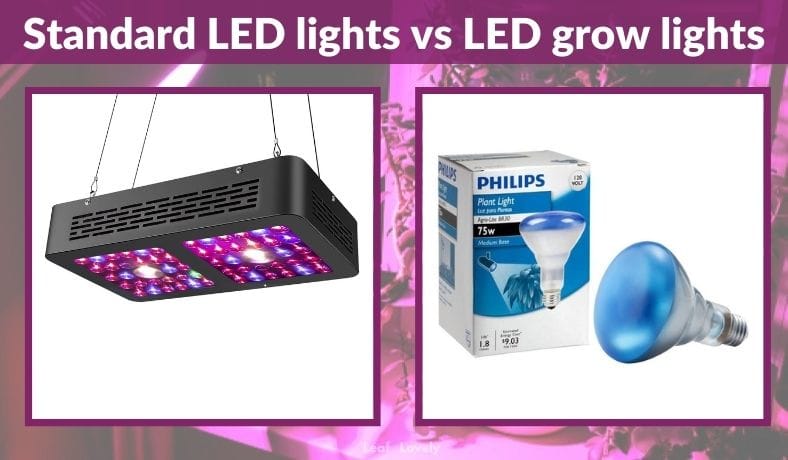
When it comes to growing lights, there are several types available on the market. But not all of them are created equal. So, what’s the difference between LEDs and other grow lights?
- LEDs come in a variety of colors, which allows growers to customize the light spectrum for their plants.
This is important because different plants need different light spectrums in order to grow properly. For example, blue light is necessary for vegetative growth while red light is necessary for flowering and fruiting.
- LED grow lights are available and designed to be easier to use. Other grow lights often require a more difficult to install bulb socket. For example, many LED plant lights have hanging wire or hooks already attached – just hang them wherever you need to and connect power.
- Standard grow lights can be cheaper in cost than LEDs. However, they typically last longer, so they may end up being more cost-effective in the long run.
- Because they’re less efficient, other grow lights waste some power as heat and will need larger wiring or a larger circuit breaker to supply them if you’re using several for more plants in a greenhouse.
Are there any drawbacks to using LED grow lights?
- The main drawback to using LED grow lights is their cost. LEDs are more expensive than fluorescent and incandescent bulbs, so you’ll need to factor that into your budget.
- Additionally, LEDs don’t emit as much heat as other types of grow lights, so you may need to supplement with additional heat sources if you live in a colder climate.
- Finally, because they are such a new technology, there is still some debate about the best way to use LED grow lights and what kind of results they produce. They’re not quite as established as older bulbs in that regards.
If you do your research and find a reputable manufacturer you should be able to get the hang of using LED grow lights without too much trouble.
How To Set Up LEDs For Optimal Plant Growth
Now that you know the answer to whether the use of led bulbs would help your plants grow, you’re probably wondering how to set up your LEDs for optimal plant growth. Here are a few tips:
- Make sure your LEDs are the correct color temperature for your plants. Too much blue light can stunt growth, while too much red light can cause plants to become leggy and produce fewer flowers or fruits.
- Place your LEDs as close to the plants as possible without burning them. The further away they are, the less effective they’ll be.
- Experiment with different lighting schedules to see what works best for your plants. Some plants do better with 12 hours of light followed by 12 hours of darkness, while others do better with a more continuous 24-hour light cycle. You need to adjust the schedule to ensure your plants are getting enough light.
- Make sure your LEDs are getting enough ventilation to prevent them from overheating. Overheated LEDs can damage plant leaves and reduce growth. It’s fairly rare for these types of lights to overheat but something to be aware of.
Frequently asked questions (FAQs)
Q: Do LED lights produce heat?
A: LEDs produce a tiny amount of heat unlike regular lights or traditional grow lights – warm at most, not hot. This makes them ideal for growing plants as they won’t scorch the leaves or raise the temperature of the grow room too much.
Their color spectrum is the reason why house plants grow better and flourish.
Q: Can I use LED lights to grow flowers?
A: Yes, you can use LED lights to grow flowers. In fact, many commercial greenhouses and nurseries use LEDs to grow flower crops. But bear in mind that LED lighting cannot be compared to natural sunlight.
Q: Are there any disadvantages to using LED lights for growing plants?
A: The only real disadvantage to using LED lights for growing plants is the initial cost. LED lights are more expensive than traditional incandescent or fluorescent lights, but they use less energy, emit less heat, and last longer, so they save money in the long run.